Frequently Asked Questions
The most-asked questions about plateaus and plains.
What exactly are plateaus and plains in simple terms?
A plateau is a broad, elevated table of land sitting well above its surroundings, while a plain is a wide, low-lying stretch of mostly level ground. Together they account for a massive share of Earth's continental surface area.
Who are the most iconic 'main characters' fans talk about?
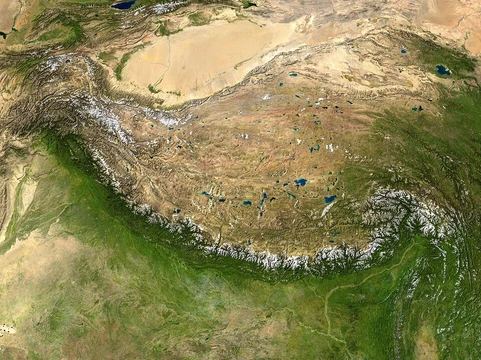
The Tibetan Plateau, the North American Great Plains, and the Deccan Plateau are the three examples that come up most often in textbooks, travel writing, and geology discussions. They tend to anchor most introductions to the topic.
Where should a complete newcomer start?
Begin by nailing down the basic elevation-and-shape distinction between the two forms, then pick one concrete example such as the Colorado Plateau or the Pampas to study in depth. Comparing a few regions afterward helps the bigger picture click.
How did they actually come to be?
Plateaus generally form through tectonic uplift, thick volcanic lava floods, or the slow erosion of once-taller mountain ranges, while plains often build up from sediment laid down by rivers, glaciers, or ancient shallow seas. Every region has its own distinct origin story.
What's the single most dramatic 'event' in their shared history?
The Deccan Traps flood-basalt eruptions roughly 66 million years ago are widely regarded as one of the most spectacular plateau-creating episodes in Earth's record. The multi-million-year uplift of the Tibetan Plateau is another, having reshaped monsoon systems across Asia.
How do the two forms feel different on the ground?
A plateau gives you a strong sense of height and a sharp rim where the land drops away, whereas a plain stretches out in a gentle, almost seamless horizontal sweep. The core contrast is vertical drama versus open, level expanse.
Why do they matter so much to human civilization?
Plains have long served as the default canvas for agriculture, trade routes, and large settlements because of their flat, workable surfaces. Plateaus, by contrast, often provided defensible high ground, mineral deposits, or unique microclimates that shaped regional cultures.
What misconceptions do new fans run into most often?
The biggest one is calling any flat area a 'plain' when, if it sits at significant elevation with steep margins, it's technically a plateau. Another is assuming plains must be grassy, when arid deserts and cold tundra can also qualify as plains.
What keeps the 'community' of geologists and enthusiasts coming back?
The sheer range of looks—from basalt column staircases to endless wheat-steppe horizons—gives researchers endless material to compare and contrast. Each region encodes a different chapter of tectonic, volcanic, or climatic history, so there's always a new angle to explore.
Where can I dig deeper beyond this FAQ?
National geological survey websites, university physical-geography courses, and region-specific field guides are the most reliable next steps. A solid introductory earth-science textbook will usually dedicate a full chapter to both forms side by side.